13 October 2007

Greening the Earth with CO2: A good thing?

Despite what skeptical websites like this would have you believe, our uncontrolled experiment in CO2 enhancement (35% and rising!) is unlikely to end favorably on our already overstressed planet. Even without considering a radiative forcing of ~1.5 W m-2 and its heating,the enhancement of CO2 is likely to have many negative impacts on our environment.

Plants are likely to be subject to so-called CO2 fertilization, wherein the additional gas added by humans allows plants to grow more quickly. It's a physiological fact that vegetation needs CO2 to enact photosynthesis. But different plants react differently. Some show a strong response while others react more slowly. Recent observations and research are beginning to discern some of the details of how this fertilization works.

The birch trees seem better at nitrogen foraging than aspens... In mixed stands of aspen and birch subjected to elevated carbon dioxide levels, birch trees increased recent nitrogen acquisition by 68 percent, compared to a 19 percent increase among the aspens.

...some of the ecosystems that are potentially most responsive to CO2 are grasslands and savannahs in the South[ern Hemisphere]... these are also some of the biggest ecosystems globally.

The effects of elevated CO2 may already be in play, as indicated by fairly consistent evidence of "bush encroachment" or "shrub encroachment" in many grasslands of the world...

While these changes may seem quite benign on the surface, they actually pose many subtle threats. By altering the composition of forest and savanna ecosystems, we affect the biodiversity in that particular biome. The effects of this alteration are unknown but are unlikely to be positive. Such changes can contribute, among other things, to species extinction, enhance summer flooding by altering water uptake and/or change the fire regime. These effects can act as further feedbacks on the environment, further accelerating change.

The fact is that we humans remain quite ignorant about the workings of the ecosystems of the Earth. It is quite arrogant of us to think that we can alter our environment willy-nilly and not expect problems to arise. We certainly don't know enough to manage the problems; any 'solutions' we try are just as likely to worsen the problem as they are to fix it. Even discounting the warming effect of CO2, the evidence suggests that our “enhancement experiment” is not going to end well. The best thing we can do is to act to slow down or even stop the experiment by reducing our emissions of greenhouse gases. It is the responsible thing to do for future generations.

11 October 2007

Tangled Bank 90

The new edition of the Tangled Bank blog carnival is out over at The Other 95%. The usual potpourri of interesting science blog posts across a variety of disciplines.


My recent post on the danger to coral reefs is included.


Go over, have a read and expand your horizons.

Profit uber alles?

To effectively combat environmental degradation and climate change, we need to listen to one another – as individuals, as states and as nations – to work together to overcome these global crises. Instead, we are seeing a selfish “me-first” sort of attitude at all levels


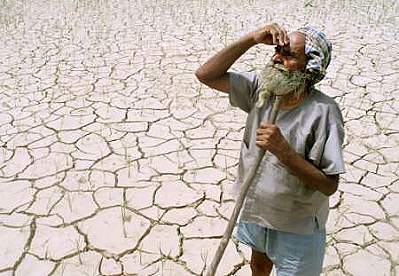
In Inner Mongolia, the grasslands are turning to sand. The deserts in this region of China are expanding – now ~28% of the land surface, up from 18% in 1994. It hasn't rained in 6 years. Sandstorms are increasingly common, increasing respiratory problems in the region, especially for children and the elderly. These problems are due to desertification, an old problem largely due to unsustainable development, including over-cropping, over-grazing, improper irrigation practices, and deforestation. It is largely preventable. Rather the government chooses to pursue profit, with year-round grazing and coal mining.


In Egypt, the government also chooses a destructive path for the future, attempting to “green the desert”. The government is encouraging people to move to the desert by pursuing a plan to reclaim 3.4 million acres of desert over the next 10 years. The plan involves massive irrigation from the Nile river. This is a disastrous and irresponsible plan, likely (in the long run) to cause more problems than it solves. The strain on resources will be enormous, and will create tensions between nations that share the Nile. These sorts of environmental tensions are dangerous, given the growing evidence of environmental links to the genocide in neighboring Darfur, Sudan.


A final example of short-sighted behaviour comes from Indonesia. There, the government is practicing “eco-extortion”, demanding payment of $5-$20 per hectare not to destroy its remaining forests. To me, this reeks of greed and pure profit motive. “Pay us or we'll damage the environment” -- a fit of childish pique. The developed nations of the world do have an obligation to assist still-developing nations in overcoming the perils inherent in our current future path. As a matter of fairness, these nations need to have their standards of living raised, but this sort of blackmail should be resisted.


While these examples are focused on the developing world, these nations are merely following the example the developed nations have set in the past. We are more guilty of these sins. Our behaviour must be changed if we expect others to follow. Leading-by-example is the best way to blaze the trail forward.


The current focus on short term profits is unhealthy, a hangover of the sort of 19th and 20th century thinking which brought about this mess in the first place. It is time for humanity to grow beyond this and redefine prosperity. A new economy is needed, with proper accounting for the “services” the environment provides. A move away from rampant consumerism and endless economic growth and acceptance that the word's resources are finite is crucial.

08 October 2007

Lessons from the past

New research results reported in Australia have re-emphasized the importance of understanding climates of the distant past. Researchers at the Australian National University in Canberra have compared ice cores from a New Zealand and Greenland glaciers, finding that the cooling in the Younger Dryas, a period of abrupt cooling about 13 000 years ago, began about 1000 years later in the Southern Hemisphere, which apparently warmed while the north was cooling and escaped the worse effects of the ensuing ice age. Previously, this event has been hypothesized to have been a global effect.


The 'spin' on the news article has been that Australia can escape a 'new ice age' or, appealing to some of the more unsavory characteristics of Australian response to refugees, may face the threat of climate refugees from the northern hemisphere. These takes are silly, and undermine the seriousness and potential implications of the results. To be fair, though, the last article linked does contain a fair bit of science background and the silly emphasis is not the fault of the scientists involved, but rather the reportage...


These results suggest that an asymmetric response is possible. I would suspect that this results may play some role in resolving the apparent paradoxical responses in the polar ice, with the record low Arctic ice melt this past boreal summer while the Antarctic recorded its greatest areal extent of sea ice. A repeated claim of the doubters and Deniers has been that it can't be global warming, because the responses of the two poles are different. This research should deflate that line of reasoning to some degree; clearly there can be an asymmetric response.


These results also highlight the importance of the study of paleoclimate. This field provides an insight into the mechanisms of climate change. How does it proceed? What are the important factors? We probably cannot use the Younger Dryas as a direct analogy to our current crisis; each climate change event (now or in the past) likely has its own signature as a result of the particular forcing which drives it and the state of the climate when it happens. The forcing of the Younger Dryas is not really known although it is suspected that a shutdown of the thermohaline circulation in the North Atlantic was the culprit. Recent hypotheses suggest that an asteroid of comet impact was involved triggering the event. Regardless of the cause, large number of mammals went extinct in North America about this time.


Humankind faces enormous trials ahead, whether through climate change or other environmental degradation (or both!). As noted in this editorial from ScienceAlert:


It is time to admit how little we know and face the risks of planetary degradation – this goes way beyond climate change. Biodiversity isn’t just birds, primates and whales; it is planetary function and resilience. In fact, in a changing world, we should be finding ways to increase resilience not reducing it. Under climate change and a growing population we face a crisis of food security and resource management. Instead of “muddling through” we need an urgent program to critically review our conceptual foundations, the data requirements for adequate monitoring, the methods for data analysis and evaluation, and the information needs of communities and institutions for adaptive management.


Praemonitus praemunitus -- Forewarned is forearmed. We need all the information we can get to successfully navigate our future challenges.

07 October 2007

Growing concerns

As noted previously on planet doom?, agriculture is the basis of our civilization and climate change, along with other human mismanagement of our natural resources threatens to erode the very foundations of society. Recent events augur the possibility of widespread starvation as an emergent threat for the future.

Many of the issues at hand center around the soil. Not all of these are directly related to climate change, though. As a worldwide average, agricultural land loses about 1 mm of soil a year, which takes about 10 years to replace. Furthermore, this reduces the ability of the land to support crops, meaning more (petroleum-based) fertilizers need to be applied to generate the same yield. All told, some 30% of the world's arable land has been abandoned since the 1960s (e.g. Suzuki, The Sacred Balance) because the soil has been depleted away.


The application of nitrogen-based fertilizers in agriculture also threatens the broader environment. These fertilizers, invented in the early-20th century, lifted limits on food production and allowed the world's population to soar (undoubtedly part of our current problem...). But it also disrupted the natural cycles of nitrogen in the environment. Agricultural run-off and combustion of fossil fuels all release nitrogen, enhancing vegetation, including invasive weeds and consequently altering local ecosystems. Runoff of nitrates also increases algae, which can kill coral reefs and form toxic algal blooms, leading to so-called 'dead zones' in the oceans.


Agricultural land is also under threat from desertification and drought. Desertification is caused in part by human activities like overgrazing, water demand and deforestation. But climate change poses a greater threat. Changing weather patterns and more frequent droughts lead to more desertification. This, in turn provides a feedback, resulting in even more climate change. Global warming could also increase the incidence of crop disease. Effects of climate change-related drought (Is it?) and the rush to produce biofuels on food production are already beginning to be felt, resulting in increasing food prices in many places.


The food supply from the oceans is also threatened by climate change and overfishing. This season's tuna catch in the Indian Ocean is its lowest in 11 years of reporting. Overfishing is a known problem, but at least somewhat reversible with informed management. The effects of climate change on fisheries may eventually become to great to manage.


These are pressing issues, and the available solutions require careful planning and forethought. Adopting no-till agricultural methods to reduce soil erosion is one step. The population is very high and growing. It will be tricky to manage fertilizer (and pesticide!) use to minimize environmental pollution while still producing enough food. Genetically modified crops or high-tech cross-breeding programs may be needed. 'Forest farming' – using the land for multiple purposes – may be a solution in some areas. A crucial step towards a solution which has been neglected for too long is managing the population to a more sustainable level. But how we do that without a devastating war, pandemic and/or mass starvation is unknown...

06 October 2007

Coral reefs under threat

Coral reefs are hotspots for ocean biodiversity. They are also very sensitive to humankind's uncontrolled 'carbon dioxide enhancement' experiment, both through the warmer sea surface temperatures (and colder, too!) wrought by global warming and as well as increasing dissolved CO2-content leading to ocean acidification. As such, the health (status) of the reefs serves as an early warning for the effects of climate change.


Unfortunately, the news is grim. Corals in Australia, Indonesia and SE Asia are disappearing faster than expected. "We have already lost half of the world's reef-building corals," said John Bruno, lead study author. For humans, it's another suggestion -- like the melting Arctic or increases in dangerous wildfire weather-- that the climate is changing at a faster pace than expected. Put another way, the climate models our current projections are based on may be too conservative.


Understanding exactly what this alarm means is an important endeavor. We are still learning about how coral reefs work. Important questions being asked are “why coral reefs bleach and die, how they respond to climate change – and how that might affect humanity”. The “engines of the reef” -- microscopic algae that feed the coral – are having their genetics investigated to better understand their role in coral bleaching. Given coral's survival through geologic time, it obviously has some survival mechanisms to resist the impacts of climate change. Ancient corals are being examined to determine what these mechanisms are, with the hope that modern corals can survive ocean acidification.


In addition to the overarching ecological impacts, loss or damage to coral reefs can also have an economic impact as well. The Great Barrier Reef in Australia provides a $A6 billion dollar a year industry, another incentive to preserve the reefs and prevent climate change. While climate change is the main threat, other dangers also exist for the reefs of the world. Agricultural pesticides are so poisonous that they can prevent coral spawning, and consequently the reef's ability to regenerate and protect itself. Fertilizer runoff can also promote algal growth, blocking sunlight and killing reefs.


The human impact on the environment is obvious – for example, climate change, land degradation and pollution. It is time to act to minimize that impact. The militant consumerism of current (primarily Western) society is ecologically destructive and socially divisive; it is time to re-imagine society into something environmentally sustainable and mutually inclusive. It is not an easy path, but the alternatives are even less appealing.

04 October 2007

Australia and climate change: The official story

A definitive government study on Australian climate change was published 2 October 2007. The report is entitled (imaginatively enough...) “Climate Change in Australia”. A link to the complete report can be found here. The report is written by CSIRO and the Bureau of Meteorology.


It is interesting to see some of the headlines and the different emphases that the various parts of the country take in their coverage. It is a comprehensive report.


In some ways, the individual news reports all say the one thing: Warming 'inevitable' in Australia. Some prominent Australians don't believe it, but previous readers will know my thoughts on climate change in Australia. Climate change isn't a future problem, it's a here-and-now problem. Hopefully we are not underestimating the unexpected pace and magnitude of change, as much as recent observations of say, polar climate change (particularly the Arctic cryosphere), would suggest we are.


Despite the inevitability of some warming, it is not too late to mitigate the worse effects. But we need to act now. Just because John Howard thinks that any contribution we make towards GHG reduction is worthless (see endnote) doesn't mean it is true. Australian of the Year Tim Flannery has some sound advice on what we should (and realistically could) actually be done to at least prevent some of the worse effects.


Some of the political reactions to the report have been interesting throwbacks. One Liberal Senator is apparently concerned about the Yellow Peril and advocates extensive colonization of the north, particularly “the remote and largely unsettled Top End” to keep other (apparently disease-ridden) migrants and/or climate refugees out. As for the Cape York Peninsula, “Half is locked up as national park and more or less unsupervised Indigenous land," he said,”...it's only a canoe ride across to Papua New Guinea”.

Terra Nullius all over again.


We do have a say and a chance. The federal election is coming soon. Make the environment a top priority in deciding your vote. The rumor is that a change in government will result in Australia signing the Kyoto Protocol. There is hope. But it is time for us to give up our unsustainable ways. It is likely going to crash soon anyway as the global financial situation is grim. Act now for future generations, and for ourselves.


Endnote

Specifically, Howard notes


Australia contributes only 1.5% of global greenhouse gas emissions, which when compared to China’s greenhouse gas emissions, are an extremely small percentage globally. If Australia was to close down all of its power stations tonight, the savings in greenhouse gas emissions would be replaced by the growth in China's energy sector emissions in less than 12 months.


Mr. Howard (and the next PM), it's not about tit-for-tat. It's about leading by example. If we sign, it puts pressure on the Americans. If they sign, China will likely follow. The path of least resistance might be easy, but is it moral? Is it the right thing to do?